Launch offer — valid today only

📄 Digital book in PDF · read it on your phone or print it

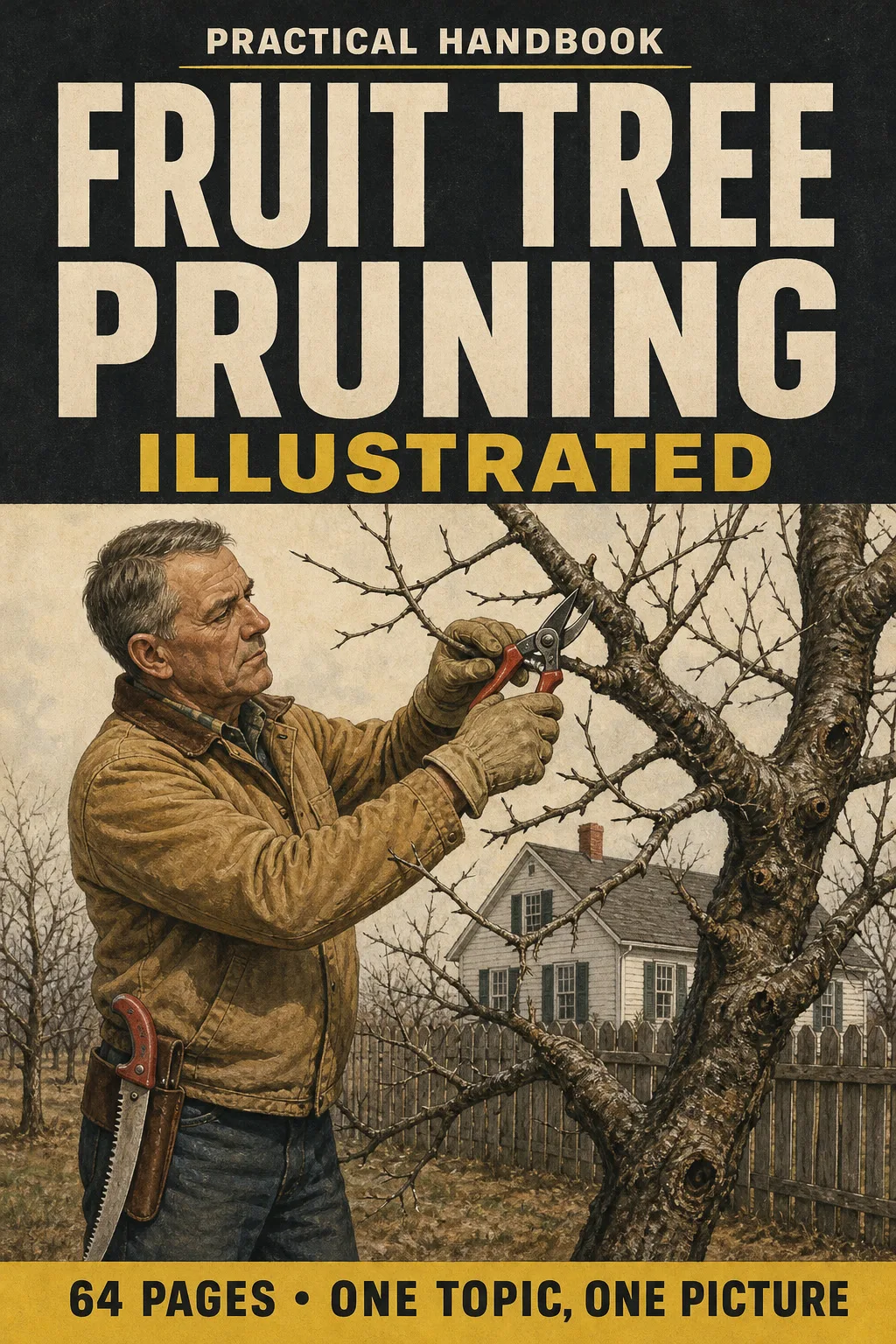
Backyard Fruit Tree Pruning and Grafting, Fully Illustrated: The Right Cut on Every Tree Every Cut Drawn, Tree by Tree

Thinning and heading cuts, the branch collar, the 3-step order, dormant timing by USDA zone, training a young tree, apples to figs, bringing back an old tree, whip-and-tongue and cleft grafts. Every topic has its own page: the drawing first, then what you need to remember. 64 illustrated pages.

YES, SHOW ME EVERY CUT

🔒 Secure checkout · PDF by email · 30-day guarantee

Every topic, its own pageEach cut drawn, with the explanation right beside it
64 illustrated pages64 illustrated pages: 60 topics in 8 parts
Up-to-date sourcesPenn State, Cornell and UC cooperative extension, plus the USDA zone map
PDF by emailFormat

Look Inside the Book

Every page has one big drawing and a box with the measurements, rules and steps you need to know:

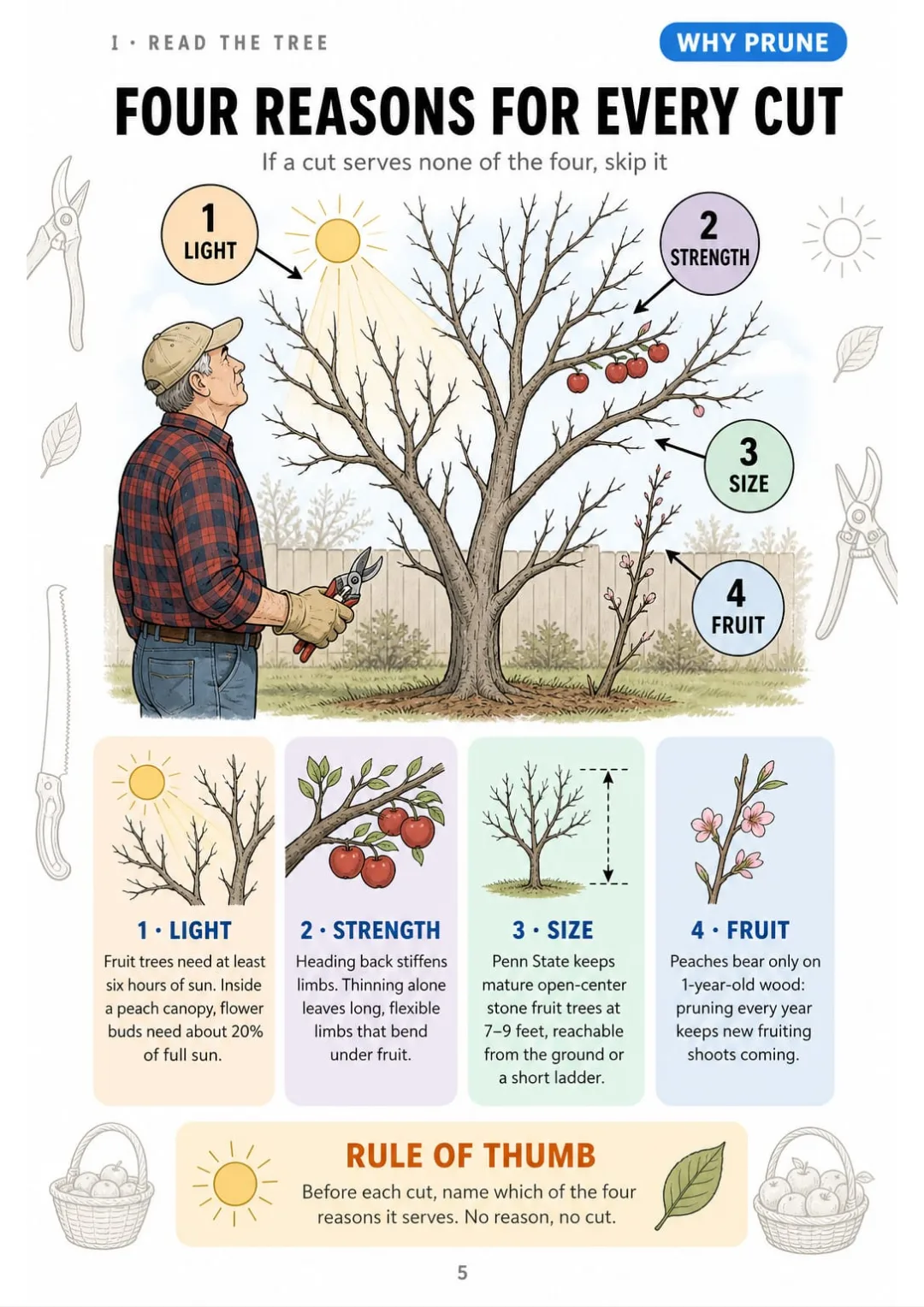
Light, strength, size, fruit: the four reasons behind every cut, with the extension numbers.
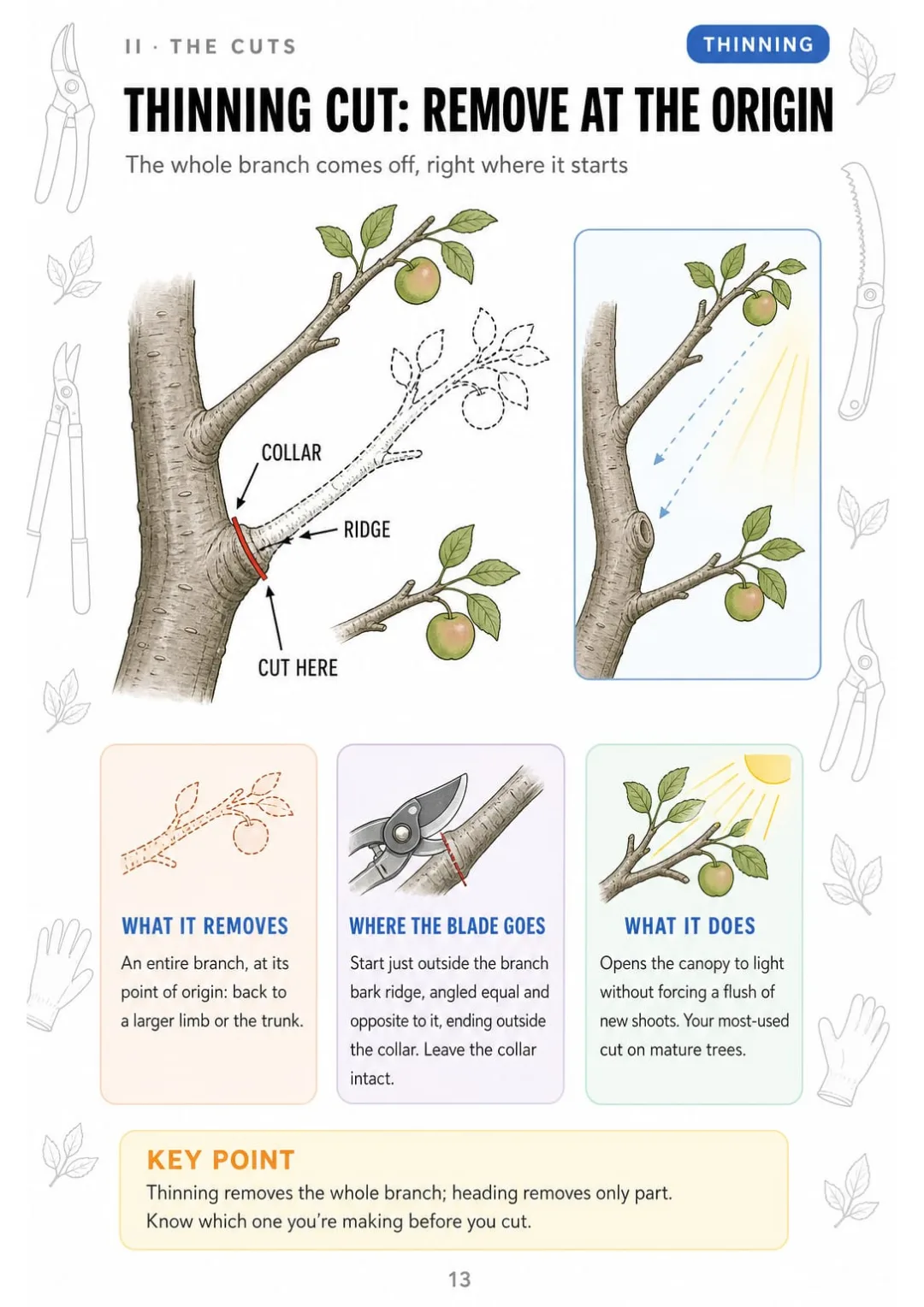
Thinning cut: the entire branch, at its origin, just outside the collar, angled opposite the branch bark ridge.
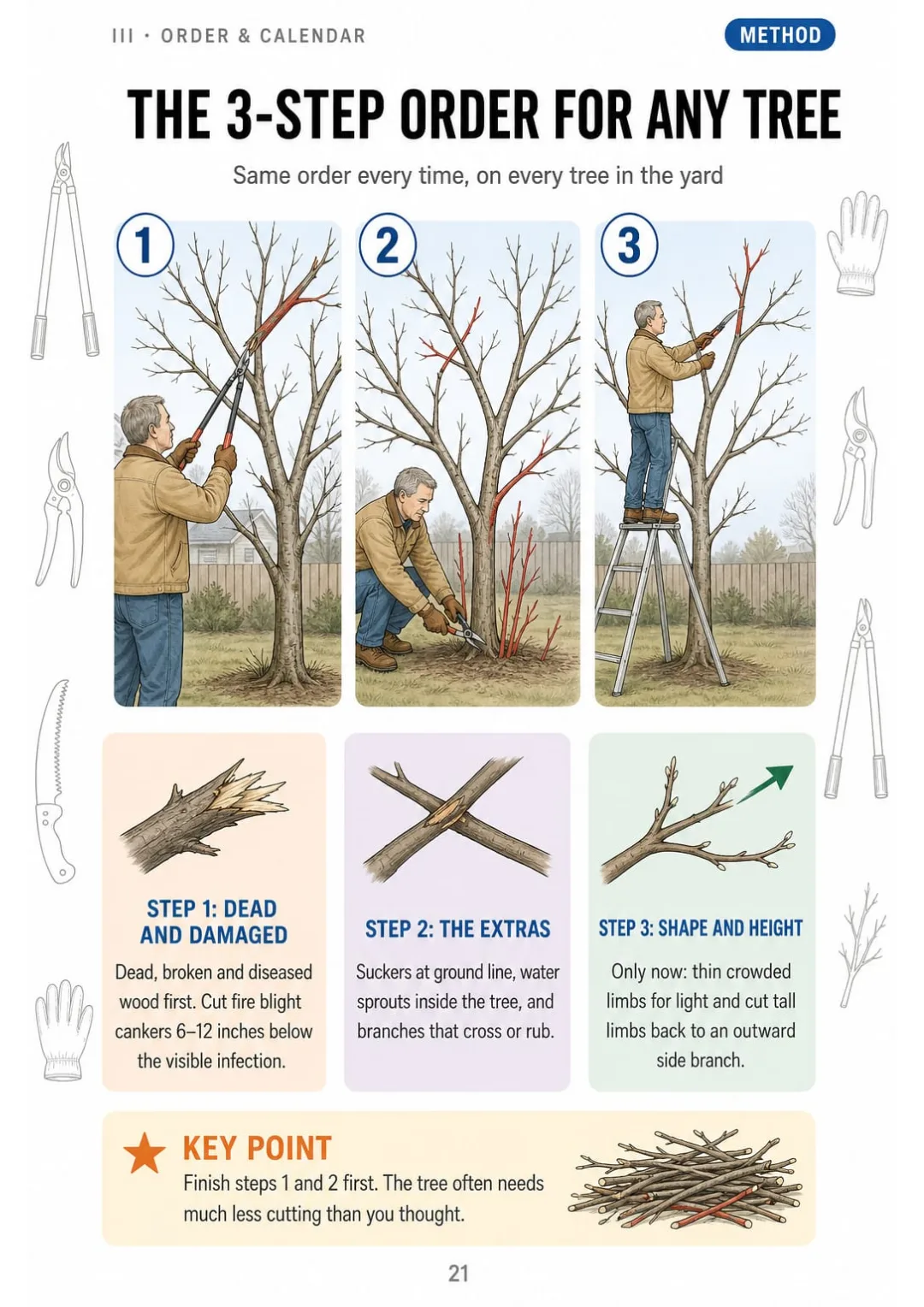
1) dead, broken, diseased · 2) suckers, water sprouts, crossing limbs · 3) shape and height
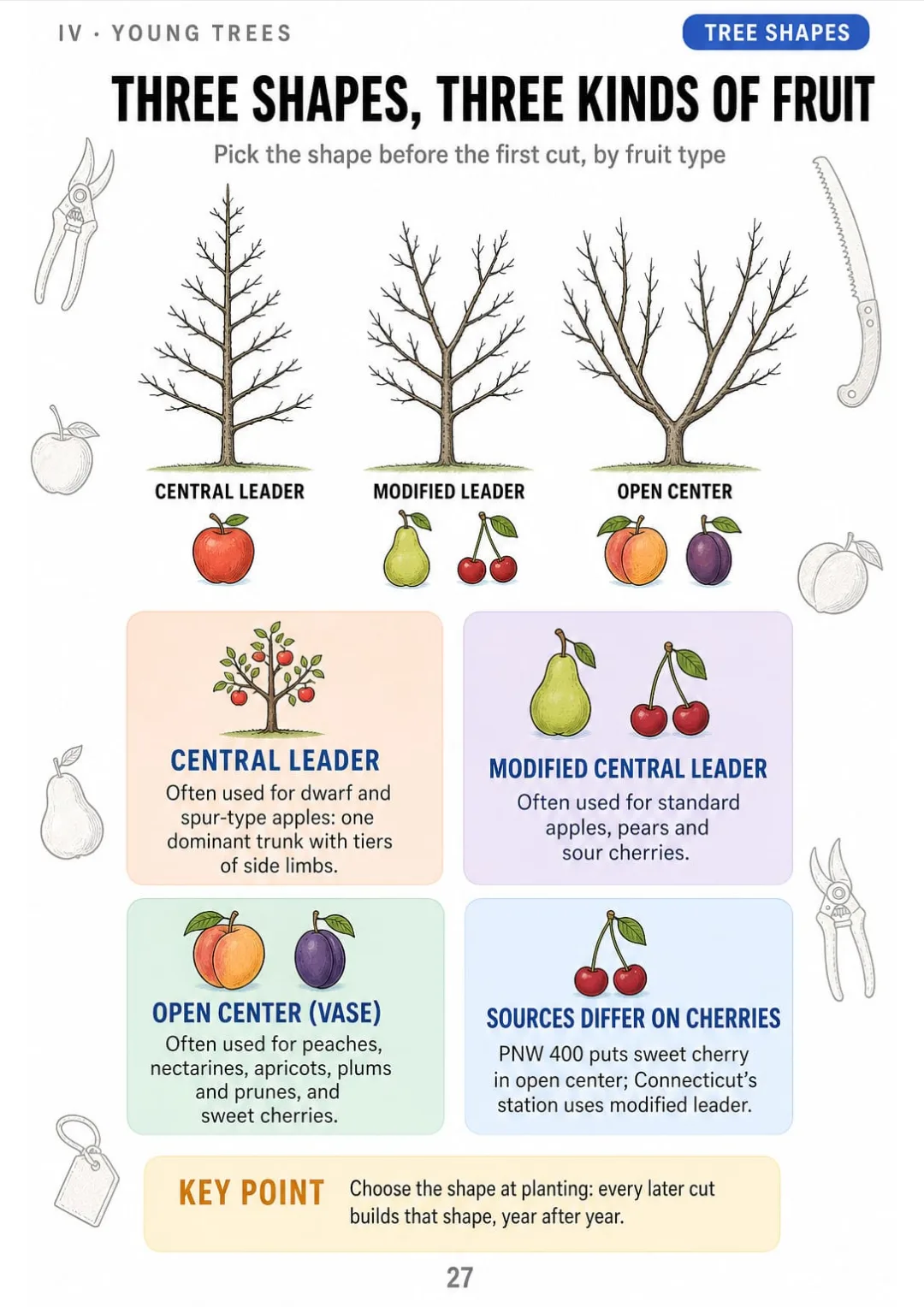
Central leader, modified leader, open center: which fruit usually goes with each shape
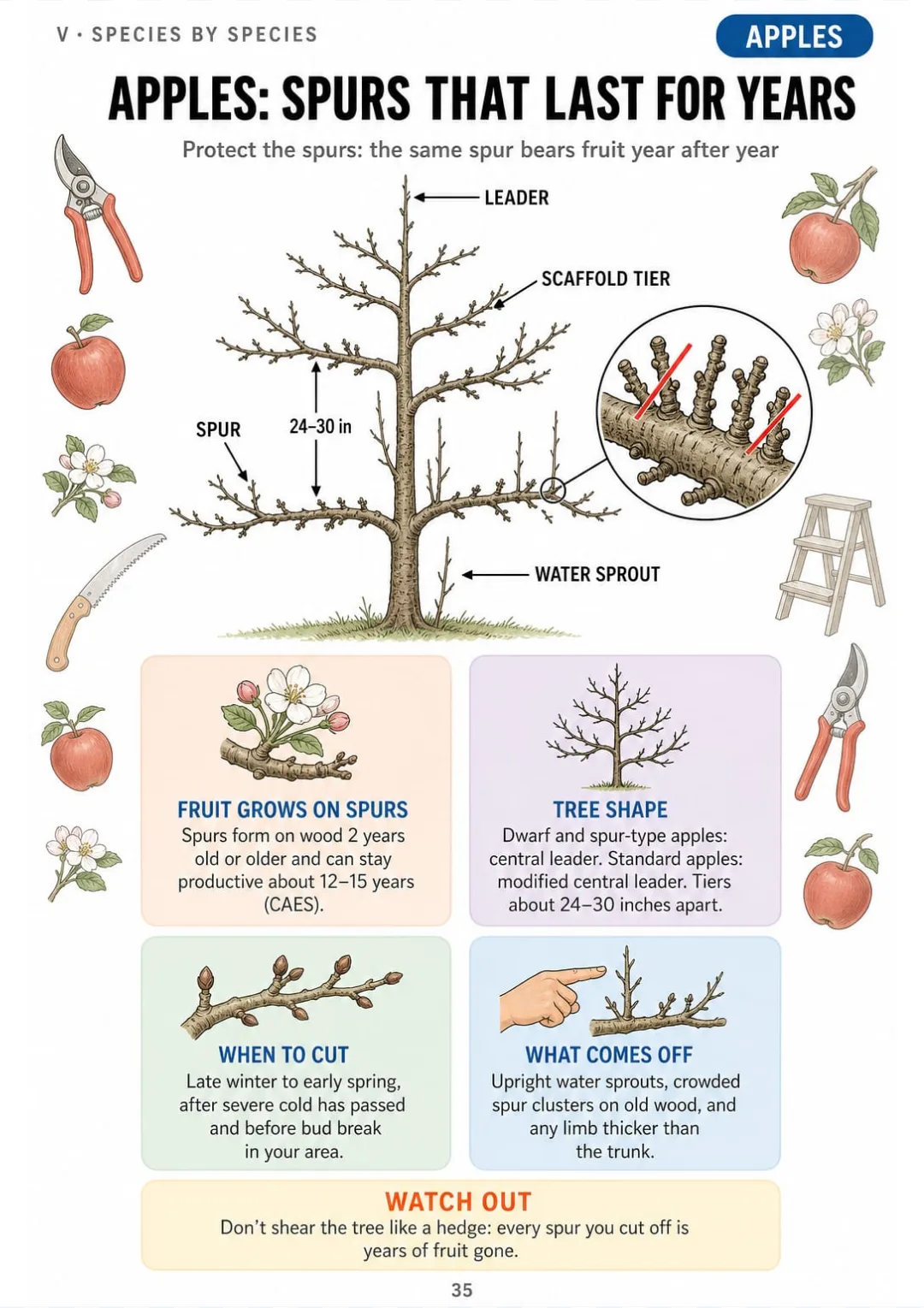
Apple spurs grow on 2-year-old wood and can bear about 12–15 years (CAES).
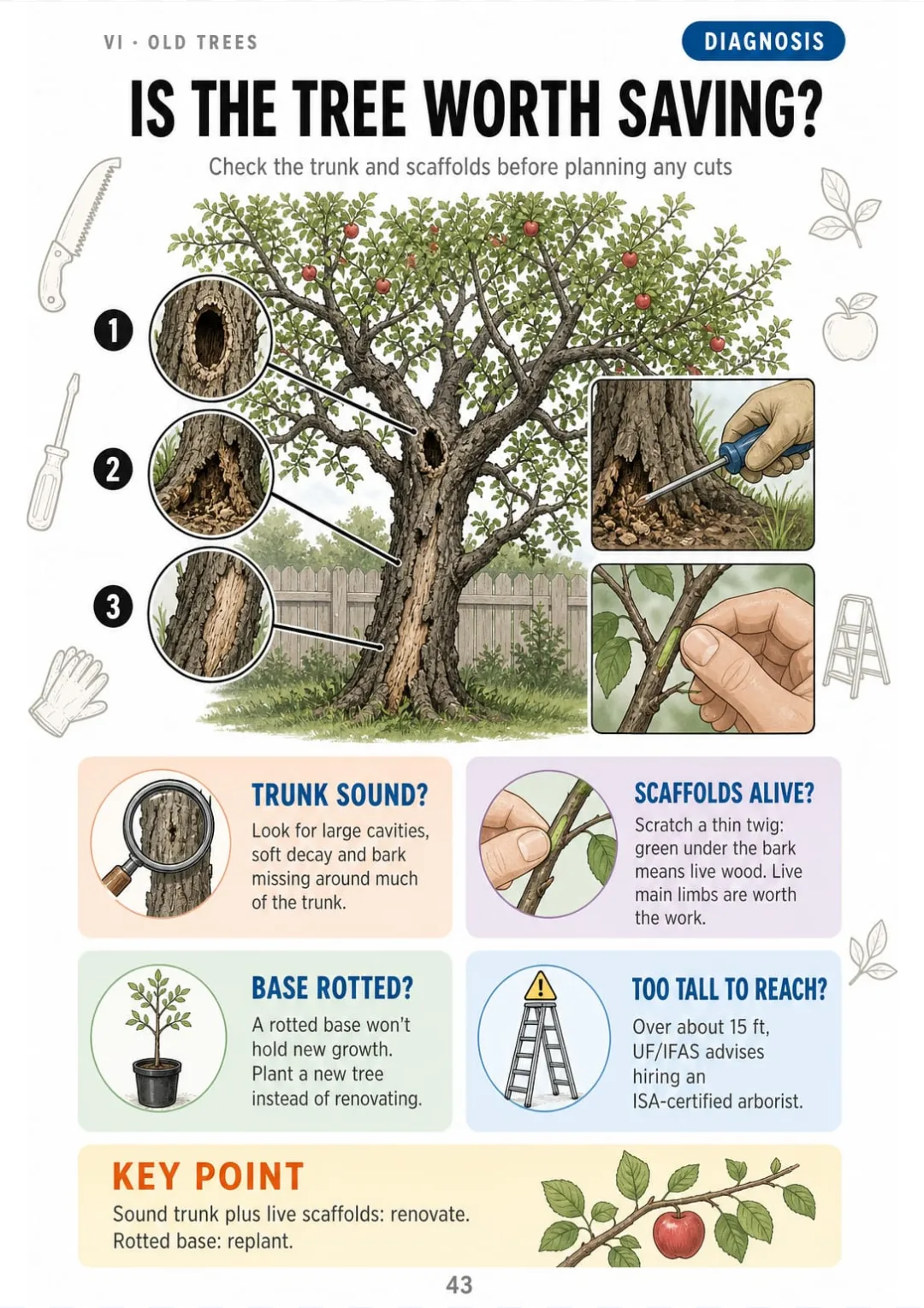
Cavities, soft decay, missing bark: the trunk decides renovate or replant
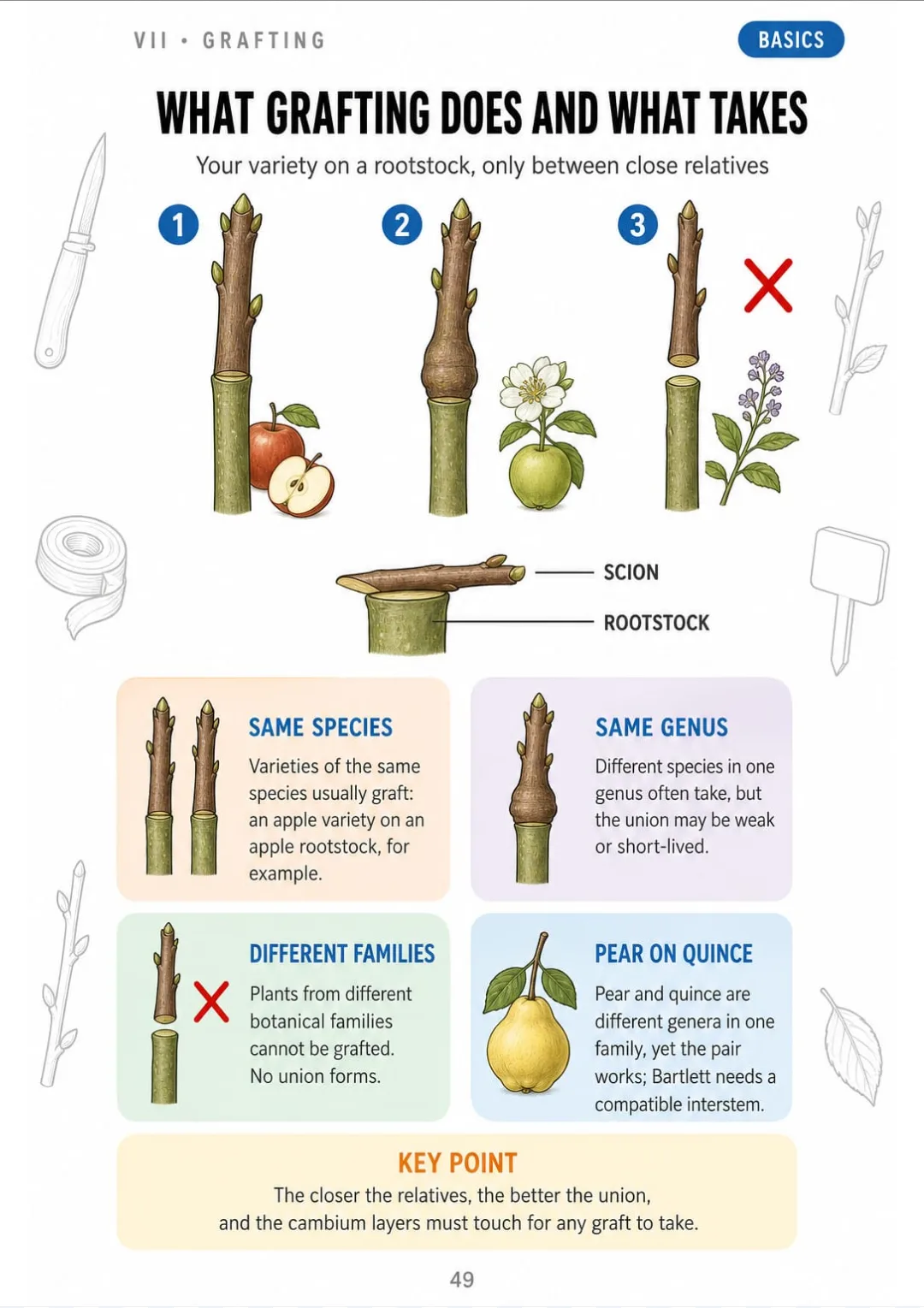
Same species usually grafts, same genus often does, different families never (University of Missouri G6971).
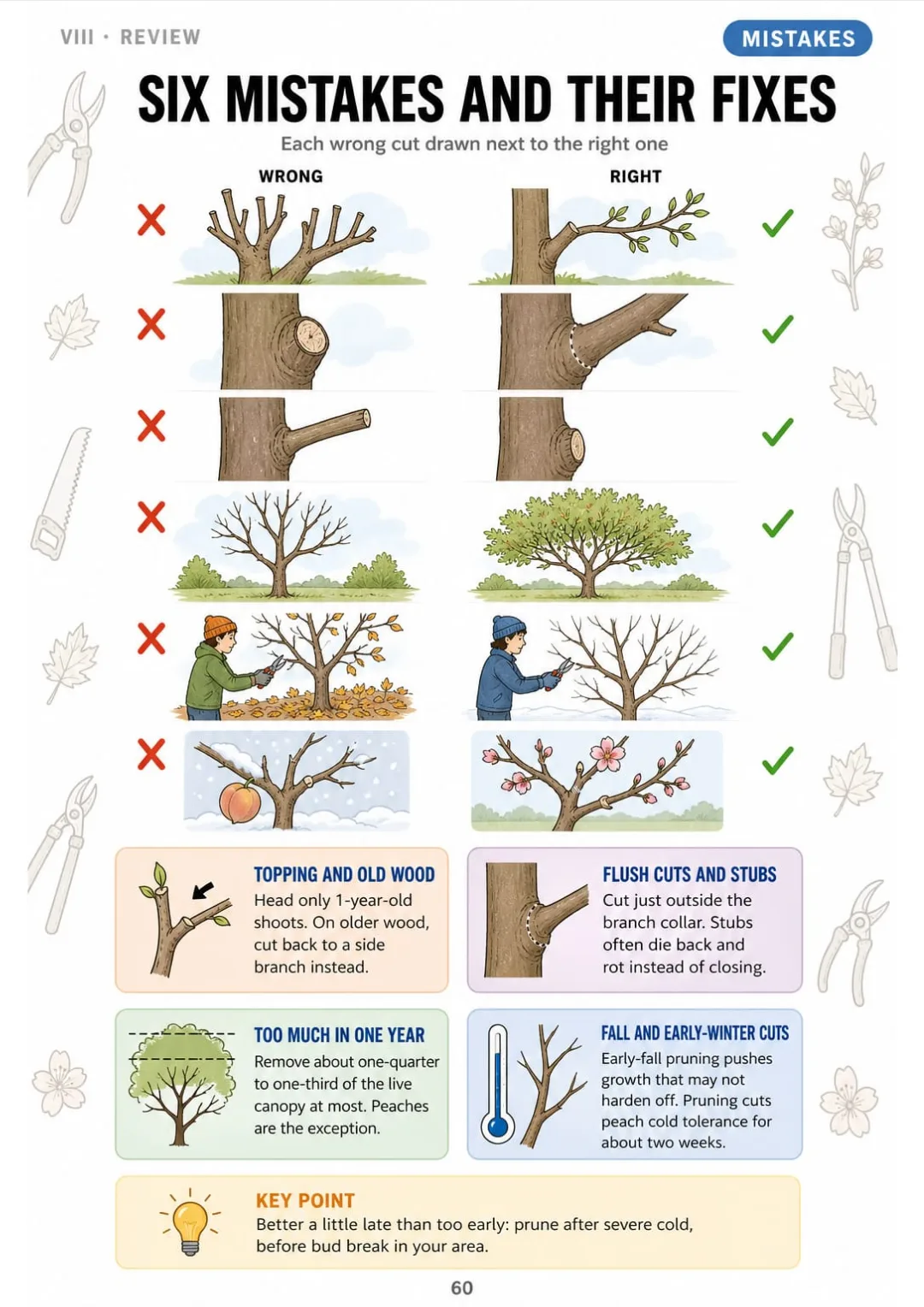
Topping, flush cuts, stubs, over-pruning, fall cuts, early peach cuts: wrong vs. right.

Swipe to see more →

These are real pages from the book. The table of contents is the full one: 8 parts and 60 topics.

The Problem Isn't You. It's How It Was Explained to You.

It's February. You're standing under your apple tree with the pruners in hand. Last year you cut hard and got a tree full of water sprouts and almost no fruit. This year you don't know which branch to cut first.

Extension guides do give an order: dead wood, then water sprouts, then shape. But it's buried in paragraphs, and every YouTube video starts somewhere else. Once you're at the tree, the order is gone.

1) dead, broken, diseased · 2) suckers, water sprouts, crossing limbs · 3) shape and height

In the book, that order is one page: three numbered boxes, each one drawn on the same tree. 1) dead, broken, diseased. 2) suckers, water sprouts, crossing limbs. 3) shape and height. You see what comes off at each step.

The thinning cut, the branch collar, the three-cut method for heavy limbs, peach one-year wood and the whip-and-tongue graft work the same way: each one has its own page.

You walk out, open the page and work the tree step by step. You know what to cut, without stopping to look up another video.

COMPARE FOR YOURSELF

The Same Topic, Two Ways to Learn It

THIS
  • The manual: line after line
  • Pruning cuts explained only in words
  • You get to the tree still unsure
A thinning cut is defined as the complete removal of a shoot or limb at its point of origin, whether at the trunk, a scaffold limb or a lateral branch. The cut should be positioned just outside the branch collar, the slightly swollen area at the base of the branch, and angled away from the branch bark ridge so that neither the collar nor the ridge is damaged. Thinning cuts generally reduce canopy density, improve light penetration and stimulate less regrowth than heading cuts of comparable size.
FOR THIS
  • The thinning cut in one drawing
  • The collar and the angle in a box
  • You see it and you get it
Thinning cut: the entire branch, at its origin, just outside the collar, angled opposite the branch bark ridge.
CONTENTS

Take a Look at the 8 Parts and 60 Topics

Reading the tree, the cuts one by one, the order and the calendar, training a young tree, species by species, bringing back an old tree, grafting and budding, and review checklists: 64 pages, all illustrated.

IRead the Tree Before You Cut · pp. 5-12
  1. Why we prune: light, strength, size and fruit
  2. Parts of a fruit tree, labeled
  3. Leaf bud or flower bud?
  4. Spurs, one-year shoots and older wood
  5. Water sprouts vs. root suckers
  6. The branch collar and the branch bark ridge
  7. The right tool for each diameter
  8. Clean, sharp tools and safe ladders
IIThe Cuts, One by One · pp. 13-20
  1. Thinning cut: remove at the origin
  2. Heading cut: shorten to a bud
  3. Cutting above a bud: 1/4 inch and the slope
  4. Choosing the bud that points out
  5. The three-cut method for heavy limbs
  6. Flush cuts and stubs: the two wrong extremes
  7. Cutting back to a side branch
  8. Wound paint: why extension services say skip it
IIIThe Fixed Order and the Calendar · pp. 21-26
  1. The 3-step order for any tree
  2. How much is too much: the one-quarter to one-third limit
  3. Dormant pruning: late winter, before bud break
  4. Your USDA hardiness zone and the timing
  5. Which tree to prune first
  6. Summer pruning: what it does and when to stop
IVTraining a Young Tree · pp. 27-34
  1. Three tree shapes: which one for which fruit
  2. The cut at planting: heading the whip
  3. Year 1: choosing the first scaffolds
  4. Wide crotch angles: strong limbs
  5. Spreaders, clothespins and tie-downs
  6. Years 2 and 3: the second tier
  7. The open center: building a vase
  8. Keeping a backyard tree at a reachable height
VSpecies by Species · pp. 35-42
  1. Apples: spurs that last for years
  2. Pears: upright growth and fire blight
  3. Peaches and nectarines: one-year wood
  4. Apricots: timing and Eutypa
  5. Sweet and tart cherries
  6. European and Japanese plums
  7. Figs: late winter, lighter in cold zones
  8. Same yard, different calendars
VIBringing Back an Old Tree · pp. 43-48
  1. Is the tree worth saving?
  2. The 3-year renovation plan
  3. Lowering a tree that got too tall
  4. Opening a crowded canopy
  5. The water sprout flush after renovation
  6. Old spurs that stopped bearing
VIIGrafting and Budding · pp. 49-59
  1. What grafting does and what will take
  2. Finding the cambium
  3. Collecting and storing scion wood
  4. Grafting tools and supplies
  5. Whip-and-tongue graft, cut by cut
  6. Cleft graft for a thick branch
  7. Bark graft when the bark slips
  8. Chip budding
  9. T-budding
  10. Aftercare: wraps, sprouts and the graft union
  11. Top-working: several varieties on one tree
VIIIReview and Checklists · pp. 60-64
  1. The most common pruning mistakes
  2. Why the tree went all water sprouts and no fruit
  3. Cut or leave it? A branch-by-branch decision guide
  4. Season-by-season checklist
  5. Before you go out with the pruners

One Page, One Topic, All Clear

Think of it this way:

It's late winter and your peach hasn't been pruned in two years. You need to know which wood bears fruit before you cut a single shoot.

You open the peach page and it's drawn: last season's shoots, where the fruit comes, and how much to take out. The cut, the bud and the angle, all on one page.

Apple spurs grow on 2-year-old wood and can bear about 12–15 years (CAES).

Same with the apple spurs, the pear that grows straight up, the cherry, the plum and the fig in a cold zone: each tree has its own page and its own calendar.

Fruit Tree Pruning Illustrated is 8 parts and 60 topics, all drawn, and it ends with the most common mistakes, a cut-or-leave-it guide and a season-by-season checklist.

What you see drawn, you don't have to memorize.

What's Inside Fruit Tree Pruning Illustrated:

Ipp. 5-12

Read the Tree Before You Cut

Why we prune, the parts of the tree labeled, leaf bud vs. flower bud, spurs and older wood, water sprouts vs. root suckers, the branch collar, tools and ladders.

IIpp. 13-20

The Cuts, One by One

The thinning cut, the heading cut, cutting 1/4 inch above a bud, the outward bud, the three-cut method, flush cuts and stubs, and why to skip wound paint.

IIIpp. 21-26

The Fixed Order and the Calendar

Know what comes off first, and when: the 3-step order for any tree, the one-quarter to one-third limit, dormant pruning, timing by USDA zone, which tree goes first and when summer pruning helps.

IVpp. 27-34

Training a Young Tree

Three tree shapes, the cut at planting, the first scaffolds, wide crotch angles, spreaders, the second tier, the open-center vase and keeping the tree reachable.

Vpp. 35-42

Species by Species

Apples, pears, peaches and nectarines, apricots, sweet and tart cherries, European and Japanese plums, figs, and the calendar for a mixed yard.

VIpp. 43-48

Bringing Back an Old Tree

Whether the tree is worth saving, the 3-year renovation plan, lowering a tall tree, opening the canopy, the water sprout flush and old spurs.

VIIpp. 49-59

Grafting and Budding

What will take, finding the cambium, scion wood, tools, whip-and-tongue, cleft, bark graft, chip budding, T-budding, aftercare and top-working.

VIIIpp. 60-64

Review and Checklists

The most common mistakes, why the tree went all water sprouts, a cut-or-leave-it guide, a season-by-season checklist and a last check before you go out.

At the end of the book: The most common mistakes, a cut-or-leave-it decision guide and a season-by-season checklist.
Plus: 2 Free Books

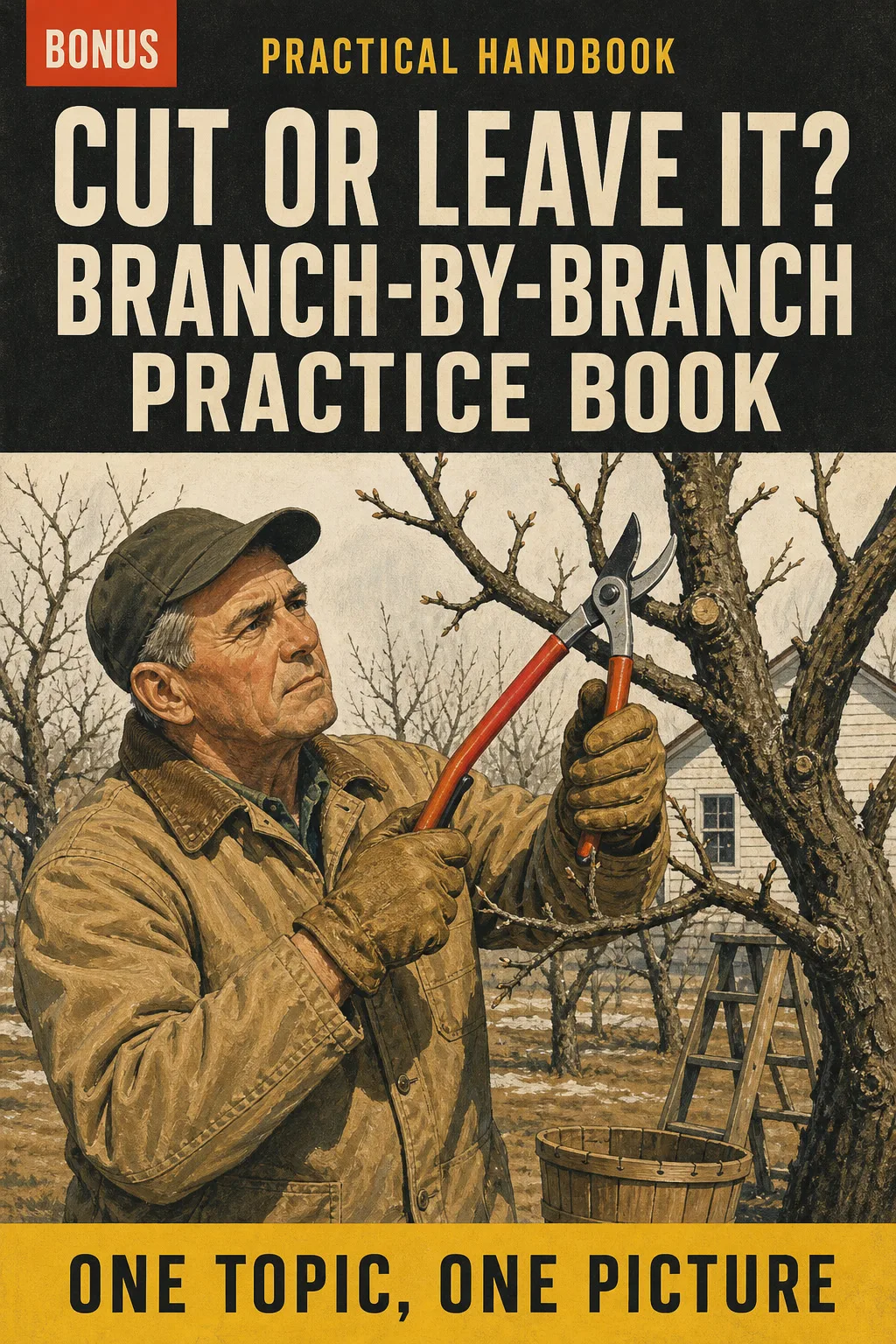
Cut or Leave It? Branch-by-Branch Practice Book

BONUS 1: «Cut or Leave It? Branch-by-Branch Practice Book»

Value on its own: US$ 17.90

Drawn trees where you mark the cuts yourself, then check the answer page, so you practice on paper before you touch a real branch.

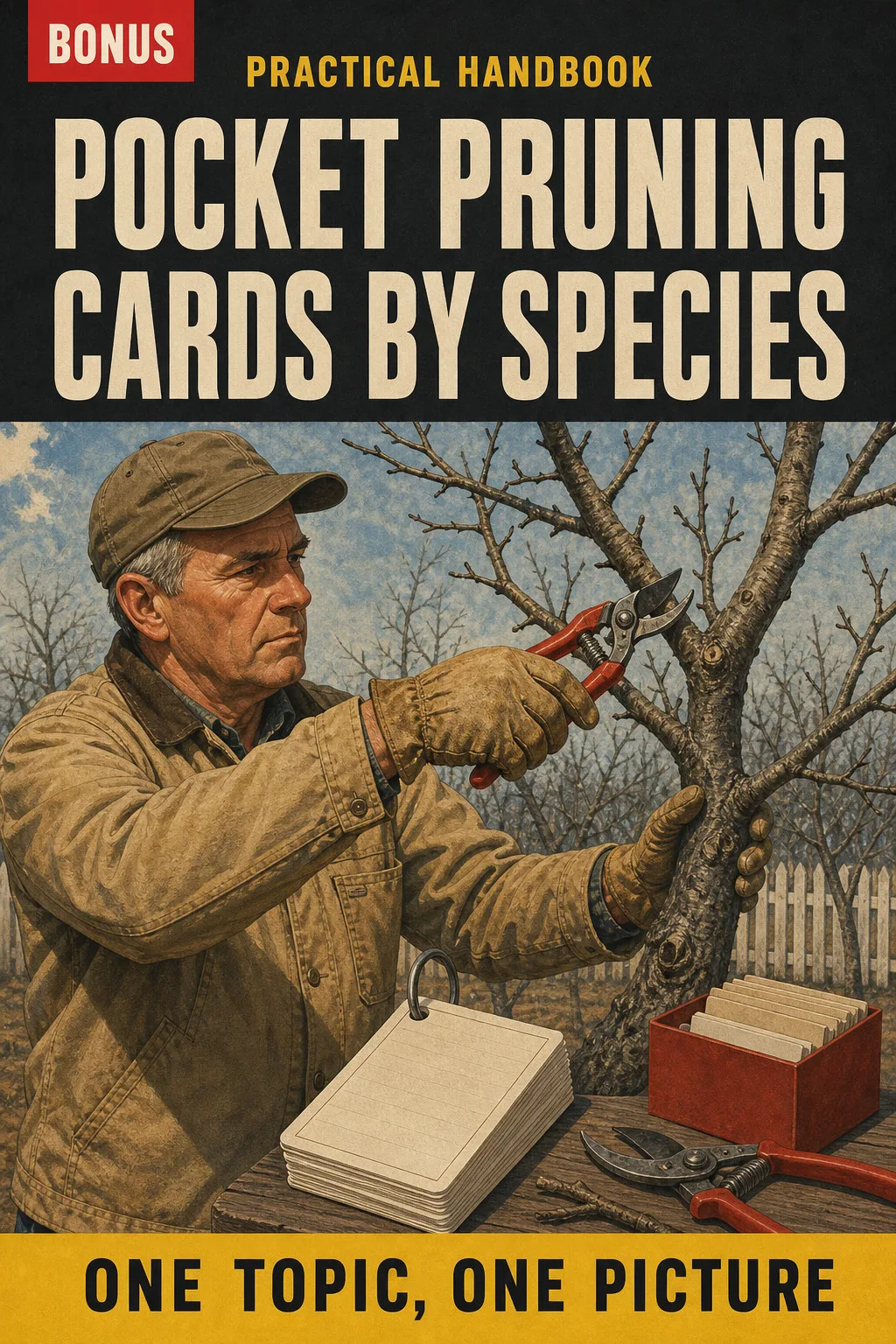
Pocket Pruning Cards by Species

BONUS 2: «Pocket Pruning Cards by Species»

Value on its own: US$ 14.90

One printable card per tree (when to prune, what to cut, what to leave) to take out to the orchard and review in a glance.

Fruit Tree Pruning Illustrated with 2 Free Books

  • Fruit Tree Pruning Illustrated: 64 illustrated pagesUS$ 63
  • BONUS 1: Cut or Leave It? Branch-by-Branch Practice BookUS$ 17.90
  • BONUS 2: Pocket Pruning Cards by SpeciesUS$ 14.90
  • High-resolution PDF to printIncluded
Total value US$ 95.80
YOUR PRICE:
US$ 27
You save US$ 68.80
YES, I WANT FRUIT TREE PRUNING ILLUSTRATED FOR US$ 27

📄 This is a digital PDF book sent to your email: nothing is printed or shipped.

Secure purchaseEncrypted payment30-day guarantee

PDF by email: We email you Fruit Tree Pruning Illustrated as a PDF, together with the two free books. It's a single payment: no installments, no extra charges.

Who This Book Is For

You just planted young trees

You just planted young trees

You train them right from the cut at planting: first scaffolds, wide crotch angles and the shape that fits each fruit, year by year.

Dormant season is coming

Dormant season is coming

You go out with the 3-step order, the cut drawn for each species and the timing for your USDA zone, all on one page per topic.

You've pruned for years

You've pruned for years

You check what's been going wrong (water sprouts, no fruit, a tree that got too tall), and you finally try grafting with each cut drawn.

Everything You Get Today

US$ 95.80US$ 27
YES, I WANT FRUIT TREE PRUNING ILLUSTRATED FOR US$ 27

📄 This is a digital PDF book sent to your email: nothing is printed or shipped.

30DAYS
GUARANTEE

30-Day Guarantee

Try Fruit Tree Pruning Illustrated for 30 days, bonus books included.

We refund everything if the file won't open, if the book isn't what you see here, if you were charged twice or if the email doesn't arrive. Just email us.

You pay once. No subscriptions.

Frequently Asked Questions

Is it for me if I've never pruned, or if I've been pruning for years?

Yes, both. It starts with reading the tree and the basic cuts, and goes all the way to renovating an old tree, top-working and budding. Every page is one topic, so you can go straight to the one you need.

Where does the content come from?

From US land-grant university cooperative extension guidance (Penn State, Cornell, UC ANR, Oregon State, Washington State, University of Missouri). Timing is tied to the USDA Plant Hardiness Zone Map, with notes on how it shifts by zone.

Is this official extension material?

No. It's an independent illustrated book built on published extension guidance. For local questions, your county extension office is still the best place to ask.

Does it replace a class or a hands-on workshop?

No. It's a study and reference book. It helps you understand each cut and take the right page out to the tree, but it doesn't replace hands-on training or an arborist for large or risky jobs.

Will it work for my USDA zone?

Yes. It's written for US backyards, and timing is tied to the USDA Plant Hardiness Zone Map, with notes for cold-winter and mild-winter zones. For exact local dates, your county extension office can confirm.

When and how do I get it?

PDF by email: the book and the 2 bonus books go to the address you enter at checkout.

Do I have to pay every month?

No. It's a one-time payment. No subscription.

Can I print it?

Yes. The PDFs are made to print at home or at a print shop, so you can keep the pages and the pocket cards in the shed.

How does the refund work?

You have 30 days. We refund everything if the file won't open, if the book isn't what you see on this page, if you were charged twice or if the email doesn't arrive: just email us.

Before You Close This Page

No more rereading pruning guides that don't stick.

The thinning cut, the heading cut and the collar: you see them drawn, and that's it.

You walk up to each tree knowing where every cut goes.

Drawings make studying faster.

The book is right below.

One-time payment: US$ 27 · Guarantee: 30 days · PDF by email

YES, I WANT FRUIT TREE PRUNING ILLUSTRATED FOR US$ 27

📄 This is a digital PDF book sent to your email: nothing is printed or shipped.